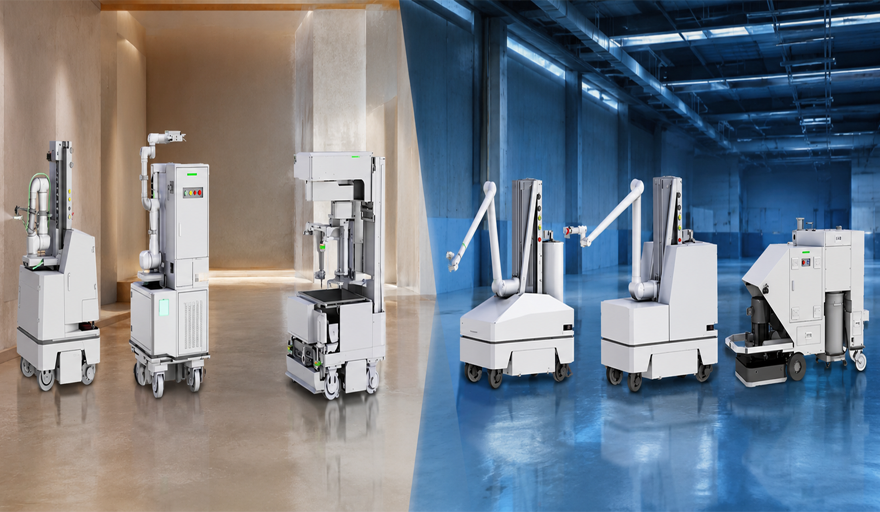
Construction robots are moving from trials into repeatable finishing work, but public support varies by market. Some governments co-fund approved equipment; others offer tax deductions or competitive research programs.
This guide separates buyer subsidies from developer funding and explains how policy affects painting, grinding, and tiling budgets as of October 2026.
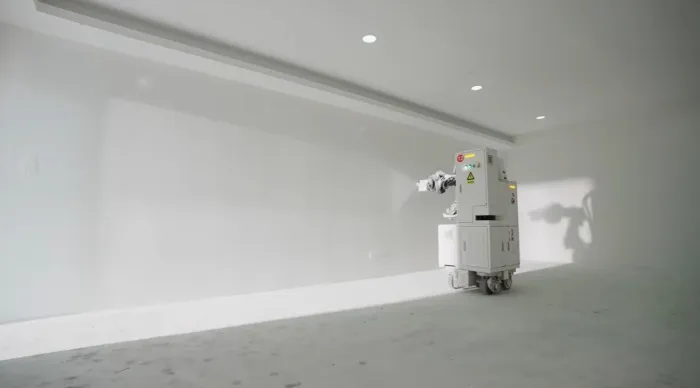
the Legend Robot putty coating robot is spraying putty and latex paint
Which Countries Directly Reduce Construction Robot Adoption Costs?
Hong Kong and Singapore provide the clearest buyer-facing routes for robots in construction industry projects.
How does Hong Kong CITF Support Construction Robot Purchases and Rentals
Hong Kong’s Construction Innovation and Technology Fund (CITF) is a direct route for robots in construction industry projects. Under the September 2026 CITF Guide, eligible General Adoption applications can receive:
70% co-funding for procurement or rental in general
Up to 80% co-funding for eligible small and medium-sized enterprises or qualifying locally developed products
A combined HK$10 millioncompany ceiling for Advanced Construction Technology and Building Information Modelling, including HK$2.5 million reserved for artificialintelligence and robotics
Up to HK$3 million per robotic technology, split into HK$2 million for procurement and HK$1 million for rental, with rental supported for up to 12 months
Funding depends on eligible costs, compliant quotations, the Approved Product Price, and the remaining balance. Apply before committing expenditure; product listing does not guarantee approval.
See How to Apply for CITF Funding for Construction Robots Before Purchase for the sequence.
How does Singapore Lower Purchase and Rental Barriers
Under the April 2026 to March 2031 Built Environment Productivity Solutions Grant (PSG) tranche, eligible local small and medium-sized enterprises can receive up to 50% of qualifying pre-approved equipment cost, with an S$300,000 five-year cap. The Building and Construction Authority lists wall-finishing, tiling, and floor grinding robots and notes that PSG is scheduled to transition to EDGE in December 2026, with details pending. Apply before any contract, order, payment, or deposit. Listed categories are not automatic approvals.
The Robot Leasing Support Scheme (RLSS) co-funds eligible providers at up to 50% for smaller suppliers and 30% for larger suppliers. The RLSS factsheet requires at least five robots, local maintenance, and fixed rates for up to two years.
How do Japan and the United States Support Equipment Investment?
Japan offers application-based grants and tax relief, while US support depends mainly on asset ownership and federal tax treatment.
Japan
The SME Labor-Saving Investment Subsidy has two relevant routes. Its catalog route funds one-half or less of listed products, with base caps of JPY 5 million to JPY 10 million by employee count. The catalog added a layout robot in September 2026, but each painting, grinding, or tiling model still needs its own eligibility check. The call-based general route supports customized systems at one-half for SMEs or two-thirds for small and qualifying revitalizing businesses.
The SME Investment Promotion Tax System can also provide 30% special depreciation or a 7% credit on eligible machinery through March 31, 2027. Construction robotics companies and buyers need to confirm classification.
United States
Federal support is a tax deduction, not a grant or rebate. For tax years beginning in 2026, Section 179 permits a deduction of up to US$2.56 million, reduced when qualifying investment exceeds US$4.09 million and limited by active business income. See Internal Revenue Service Publication 946.
Separately, IRS Notice 2026-11 provides 100% bonus depreciation for eligible property acquired and placed in service after January 19, 2025. New or certain used tangible equipment may qualify. Ownership, business use, timing, and tax basis matter, so an operating renter normally deducts rent rather than the asset cost.
Which Other Priority Markets offer Verified Construction Automation Support?
The following programs can matter to developers and pilot partners, but they are not general buyer rebates.
Market | Verified Route | Practical Scope |
Canada | SR&ED provides a 15% investment tax credit, or up to 35% for eligible Canadian-controlled private corporations. | Qualified research and development (R&D) |
South Korea | KAIA lists smart-construction and construction-site robot platform R&D. | Developer or consortium projects |
Germany and EU | Zukunft Bau covers automation research; Built4People supports built-environment research. | Competitive calls, not buyer rebates |
United Arab Emirates | The Dubai Robotics and Automation Program targets 200,000 robots. | Cross-industry strategy; no fixed construction-buyer rate is published |
Note: This is a compilation of information for reference purposes only. Local funding opportunities may still exist in other markets.
What is a Realistic Price for an Interior Construction Robot Fleet
CITF ceilings indicate about HK$2.32 million to HK$2.40 million for a painting, grinding, and tile-laying fleet.
The estimate combines an LQ05A paint sprayer at HK$520,000 or a PA25-047 unit at HK$598,000, a HK$298,000 grinder, and a HK$1.5 million tile-laying reference. Rental ceilings include HK$100,000 monthly for tile laying and HK$133,000 for one painting package.
These are ceilings, not quotations. Construction robots for sale may add freight, consumables, operators, training, and service. A spot construction robot has different economics.
How can Contractors Prepare a Stronger Subsidy Application?
A clear application links one site problem to one robot workflow.
Construction robotics companies can supply product records, while applicants remain responsible for compliance.
1. Define the task. Record area, height, current output, quality issues, and whether spraying, grinding, or tiling is required. A general robot doing construction is harder to justify than a defined package.
2. Verify the rule. Check the applicant, project, product code, approved price, eligible costs, deadline, and whether support funds purchase, rental, tax relief, or R&D.
3. Model utilization. Compare ownership and rental using the project pipeline, maintenance, operators, and supported periods.
4. Keep evidence. Preserve quotations, approvals, invoices, delivery records, training logs, site photographs, and output data.
For Hong Kong, the CITF Construction Robot Subsidy Guide explains the funding route.
What can a Real Interior Robot Deployment Achieve?
A real-world project case can provide valuable insights into the feasibility of achieving expected productivity and quality targets.
At Baywind Residences in Singapore, Legend Robot's self-developed Putty & Latex Paint Spraying Robot covered 5,000 square meters across 24 apartments in 30 operating hours. Reported output was five times the manual rate, with zero rework.
However, site access, surface preparation, materials, operators, and inspection still influence robot performance on construction projects.
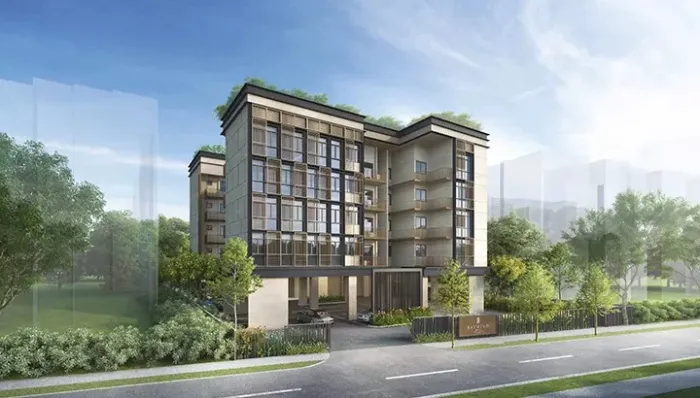
Baywind Residences, Singapore
Final Thoughts
Government support for construction robotics varies across markets, offering different opportunities to reduce robot adoption costs.
For contractors considering the adoption of construction robots, understanding local funding policies and evaluating them alongside practical project requirements can help support more informed investment decisions. Factors such as equipment eligibility, application timing, operating costs, and expected utilization all play an important role in determining the long-term investment value of construction automation.