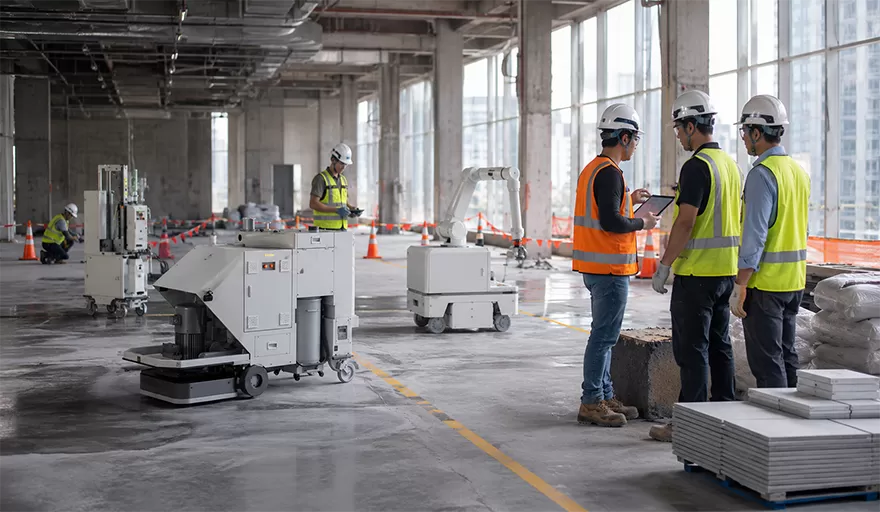
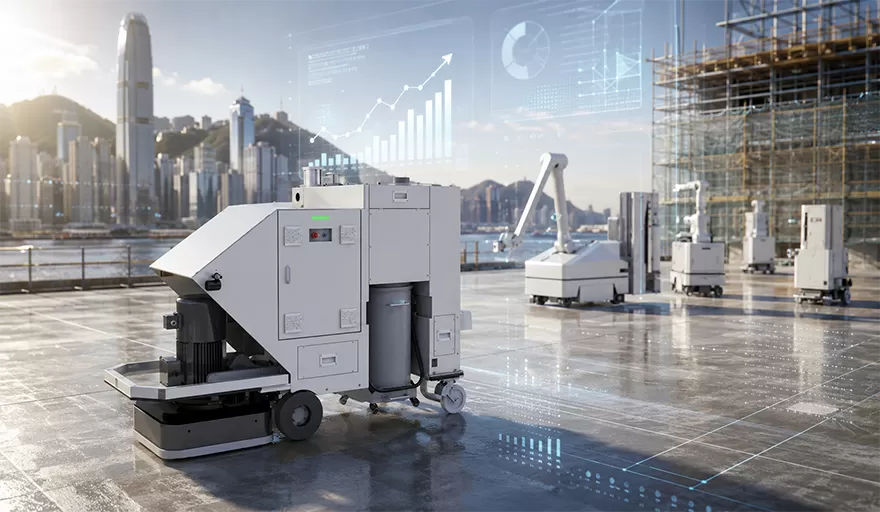
work package and repeatable site condition. Instead of asking which robot is 'best,' contractors should ask where repetitive work, quality variation, labor pressure and schedule risk are concentrated in the construction sequence. A workflow map can then match wall preparation, painting, floor grinding and tile installation to the robotic system that fits each stage.
Why Project Stage Is a Better Selection Method Than Robot Type
Construction sites change continuously. A robot that is valuable during interior wall finishing may have no role during structural work, and a floor-preparation robot cannot create value until concrete areas are released. NIOSH notes that construction automation can improve productivity and reduce exposure to repetitive, labor-intensive work, but changing jobsites also create unique safety and coordination challenges.
This means the purchasing decision should start from the workflow. For each candidate task, define the start condition, input material, work area, quality requirement, output, crew interface and next trade. Only then should a contractor compare robot reach, productivity, navigation, coverage and operator requirements.
Stage Map: Where Different Construction Robots Fit
Project Stage | Typical Task | Robot Type | Best-Fit Condition | Key Planning Metric |
Wall preparation | Putty application and wall-base preparation | Putty / dual-material spraying robot | Repeated interior rooms and large wall areas | Coverage, coat thickness, daily area |
Interior coating | Latex paint on walls and ceilings | Latex paint spraying robot | Residential, hotel, office and commercial interiors | Accepted spray area, wall height, operators |
Floor preparation | Concrete grinding and polishing | Floor grinding robot | Large garages, factories and public floors | Coverage, pass type, dust handling |
Floor installation | Large-format tile placement | Tile laying robot | Organized, repetitive floor layouts | Tiles/day, alignment, floor readiness |
The table is deliberately stage-based. It helps prevent a common automation mistake: selecting a robot from a feature list without confirming that the surrounding workflow can feed it enough ready work.
Wall Preparation and Painting: Separate the Process Before Automating It
For standard residential interiors, the Latex Paint Spraying Robot (3.3m) is designed for apartments, hotels and office projects and publishes 95% coverage with 1,200-1,500 m²/day. The deployment plan should define when walls are ready, which areas remain manual, how paint is staged and how rooms are released.
If the same project also needs automated putty application, surface preparation and final coating should be planned as two linked work packages. The robot should not be evaluated only by peak spraying speed; the key metric is accepted area handed to the next trade.
For higher interior walls and large public or commercial areas, the Putty & Latex Paint Spraying Robot (6.2m) extends the working envelope and supports both putty and latex-paint spraying on one platform. This makes wall height and material sequence important inputs to robot selection.
Floor Preparation and Tiling: Automate the Sequence, Not Just the Task
The Floor Grinding Robot is positioned for concrete hardener, dry shake hardener and epoxy-floor environments, with published rough-grinding capacity of 800-1,000 m²/day, polishing capacity of 3,000-4,000 m²/day and at least 95% coverage. Its place in the project workflow is upstream: it prepares the substrate for later floor treatment or finishes.
This upstream position means grinding should be coordinated with concrete cure, defect repair, floor inspection and downstream coating or installation. If the next activity is tiling, the team should define the acceptance point between surface preparation and tile installation rather than scheduling both robots independently.
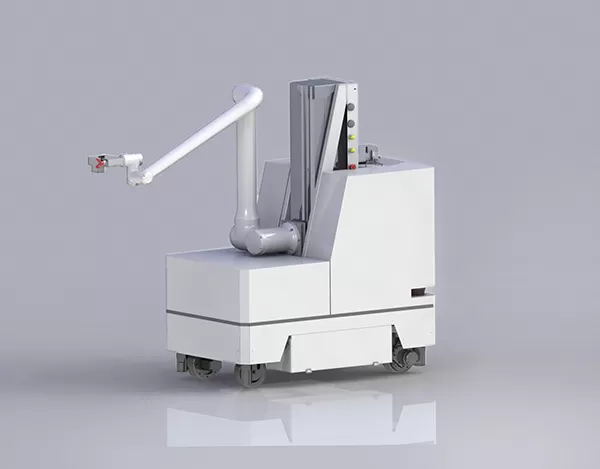
A Tile Laying Robot is most valuable after the substrate and layout information are stable. Repetitive floor geometry, large-format tiles and clear staging areas allow the robot to focus on accurate placement while the project team manages material supply, edge conditions and quality checks.
How Can Contractors Decide Whether a Task Is Ready for Robotic Automation?
A task is a strong automation candidate when it is repetitive, measurable and released in sufficiently large work zones. The following readiness questions are more useful than asking whether a robot is technologically advanced:
· Is the input stable? Materials, surface condition and digital layout should be defined before production begins.
· Is the workface repeatable? Repeated rooms, large floor zones or consistent wall systems create better robotic utilization.
· Can output quality be measured? Coverage, flatness, alignment, coat thickness or accepted area should have clear acceptance criteria.
· Can the robot move and be serviced? Access width, thresholds, lifts, charging or power supply, material refill and waste removal need to be planned.
· Is the next trade synchronized? Automation is less valuable if finished zones wait for days before the next process begins.
How Should ROI Be Measured Across Different Construction Robots?
ROI should be evaluated at the work-package level. Equipment price is only one input. Contractors should compare labor hours, accepted output per day, rework, material loss, schedule compression, safety controls, supervision requirements and the number of projects over which the robot can be deployed.
The best metric differs by process. Painting may be measured by accepted m²/day and operator-to-robot ratio. Grinding may be measured by m²/pass/day and coverage. Tiling may be measured by installed tiles or area per shift together with alignment and rework. Using one generic 'robot productivity' metric across all tasks can hide the real source of value.
FAQ: Selecting Construction Robots for a Project
Q1: Should a contractor automate the highest-labor task first?
A1: Not always. A high-labor task may still be a poor automation target if the workface is fragmented, specifications change frequently or the robot cannot receive a steady sequence of ready areas. Repetition and workflow stability matter alongside labor cost.
Q2: Can different construction robots be deployed on the same project?
A2: Yes, but they should be sequenced by trade and workface. A project can use wall-finishing robots and floor robots at different stages, provided each system receives clear release areas and does not interfere with other trades.
Q3: What is the first step before buying construction robots?
A3: Build a task map of the project and identify where repetitive work, labor constraints, quality variation and schedule pressure overlap. Then run a pilot with measurable acceptance criteria before scaling the fleet.
Conclusion
Construction robots should be selected as part of a workflow, not as isolated equipment. By mapping robots to wall preparation, painting, floor grinding and tile installation stages, contractors can define clear inputs, outputs and handovers for each automated task. This stage-based method makes productivity easier to measure, exposes site constraints earlier and provides a stronger basis for scaling automation across multiple projects.