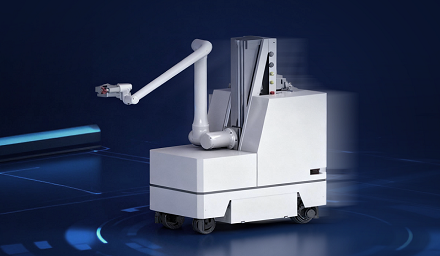
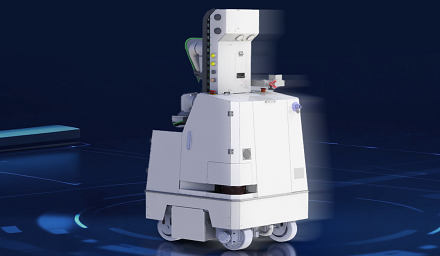
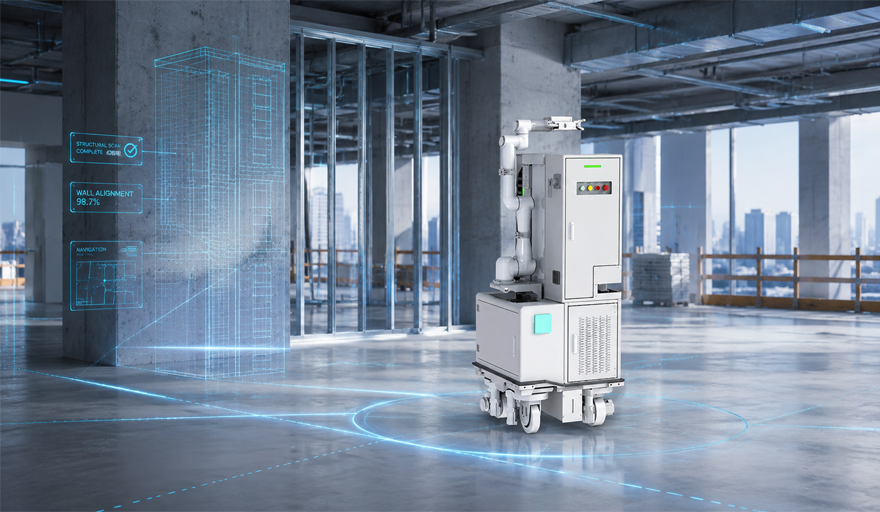
Floor finishing is one of the most labour-intensive and workflow-sensitive stages in construction. From concrete surface preparation to final tile installation, floor-related work often involves large areas, repeated movements, heavy physical effort, strict quality requirements, and tight project schedules.
For Hong Kong contractors, this creates a practical opportunity for construction robot adoption. Instead of viewing robots only as future technologies, contractors can start with floor workflows that are repetitive, measurable, and easier to connect with productivity and quality improvement.
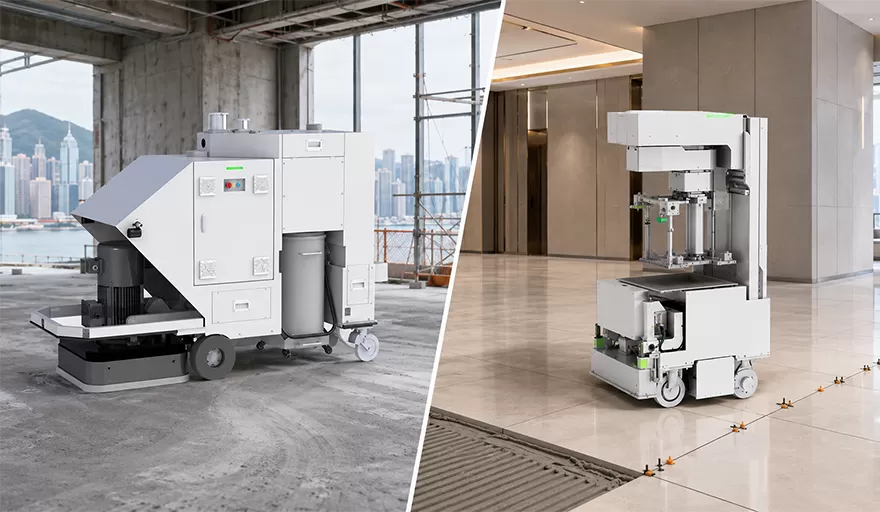
Two robot categories are especially relevant: the Floor Grinding Robot and the Tile-Laying Robot. The first supports concrete floor surface preparation, while the second supports automated tile installation. Together, they can help contractors build a more systematic floor finishing automation strategy.
This guide explains how floor grinding robots and tile laying robots can support Hong Kong construction projects, what project scenarios they fit, and how contractors can prepare for CITF-related robot adoption.
Quick Answer: When Should Contractors Use Floor Grinding and Tile Laying Robots?
Contractors should consider floor grinding and tile laying robots when the project includes large-area, repetitive, and quality-sensitive floor work.
A Floor Grinding Robot is suitable for concrete floor grinding, surface preparation, renovation, and floor treatment before later finishing work. It is especially relevant for car parks, industrial facilities, public buildings, logistics spaces, and large indoor floor areas.
A Tile-Laying Robot is suitable for automated tile installation in residential, commercial, and public construction projects, especially where the floor layout is repetitive and the work area is large enough for organized robot deployment.
A simple selection table is shown below:
Construction Stage | Recommended Robot | Typical Application |
Concrete floor preparation | Floor Grinding Robot | Car parks, industrial floors, public buildings, renovation projects |
Surface treatment before coating or finishing | Floor Grinding Robot | Large concrete floors, floor leveling preparation, surface cleaning |
Floor tile installation | Tile-Laying Robot | Residential units, commercial spaces, public facilities |
Large-area repetitive tiling | Tile-Laying Robot | Apartments, corridors, lobbies, indoor public areas |
The key is to match the robot with the construction stage. Floor grinding belongs to surface preparation. Tile laying belongs to final floor finishing.
Why Floor Finishing Is a Good Starting Point for Construction Robot Adoption
Not every construction process is equally easy to automate. Some tasks are irregular, highly fragmented, or dependent on complex manual judgment. Floor finishing, however, often has several features that make robot adoption more practical.
First, floor work is usually area-based. Contractors can measure the square meterage, divide the site into zones, and plan the workflow more clearly.
Second, floor work is repetitive. Grinding, surface preparation, tile positioning, and tile installation often involve repeated actions across large areas.
Third, floor quality is easy to inspect. Surface flatness, grinding consistency, tile alignment, and finishing accuracy can be checked against project requirements.
Fourth, floor work can be physically demanding. Manual grinding and tile installation require long hours of bending, lifting, pushing, positioning, and repetitive movement. Robot-assisted workflows can reduce the physical burden on workers.
Fifth, floor work affects follow-up construction stages. Poor surface preparation can create coating, flooring, or tile installation problems later. Poor tile installation can lead to rework, delay, and higher defect management costs.
For these reasons, floor finishing is a practical entry point for contractors that want to start using construction robots in Hong Kong projects.
Floor Grinding Robot: What It Does and When to Use It
A floor grinding robot is designed to support concrete floor grinding and surface preparation. It can help contractors handle repetitive grinding work in a more controlled and planned way.
The Floor Grinding Robot is suitable for projects where large-area floor treatment is required, such as public buildings, indoor car parks, industrial facilities, logistics warehouses, commercial spaces, and renovation projects.
Typical use cases include:
· Concrete floor grinding
· Floor surface preparation
· Renovation floor treatment
· Surface preparation before coating
· Surface preparation before flooring installation
· Large-area indoor floor grinding
· Car park floor preparation
· Industrial floor treatment
Manual floor grinding can be physically demanding and difficult to keep consistent over long work periods. A robot-assisted approach can help contractors reduce repetitive manual operation, improve workflow predictability, and support more stable floor preparation quality.
For Hong Kong projects, the Floor Grinding Robot may be especially useful where the floor area is large, the schedule is tight, and consistency is important.
Tile-Laying Robot: What It Does and When to Use It
Tile laying is another floor workflow that can benefit from automation. Traditional tile installation depends heavily on worker skill, layout control, physical endurance, and site coordination. In large-area projects, maintaining consistent alignment and efficiency can be challenging.
The Tile-Laying Robot is designed to support automated tile installation in residential and commercial projects. It is suitable for projects with repetitive floor areas, planned layouts, and sufficient site preparation.
Typical use cases include:
· Residential floor tiling
· Apartment unit tile installation
· Commercial interior tiling
· Public facility tile installation
· Large corridor floor tiling
· Repetitive tile installation in standardized rooms
· Large-area indoor floor finishing
A tile-laying robot can support contractors by improving workflow planning and reducing the physical burden of repetitive tile placement. It can also help contractors standardize installation processes across similar areas.
For Hong Kong residential projects, the Tile-Laying Robot may be suitable where multiple units share similar floor layouts. For commercial or public spaces, it may be useful where large open areas or corridors require repeated tile installation.
Floor Grinding Robot vs Tile-Laying Robot: Key Differences
Although both robots are related to floor construction, they are used at different stages.
Comparison Factor | Floor Grinding Robot | Tile-Laying Robot |
Construction stage | Floor preparation | Final floor finishing |
Main function | Concrete surface grinding and preparation | Tile positioning and installation support |
Best project type | Car parks, industrial floors, public buildings, renovation | Residential, commercial, public indoor spaces |
Main value | Reduces repetitive grinding work and improves preparation consistency | Supports repetitive tile installation and layout consistency |
Site requirement | Large enough grinding area, clear floor access, suitable power and dust control | Planned tile layout, prepared floor base, tile supply coordination |
Typical customer | Flooring contractors, main contractors, renovation teams, public project contractors | Tiling contractors, interior finishing teams, residential contractors, commercial contractors |
CITF application focus | Surface preparation, productivity, safety, large-area grinding | Installation efficiency, layout consistency, reduced repetitive manual work |
The two robots should not be seen as substitutes. They serve different parts of the floor construction workflow. In some projects, contractors may use only one. In more complete floor automation strategies, both may be considered at different stages.
Building a Floor Finishing Automation Workflow
A stronger way to understand these robots is to view them as part of a floor finishing workflow.
A typical floor workflow may include:
1. Site preparation
2. Floor cleaning and inspection
3. Concrete surface grinding
4. Surface treatment or leveling preparation
5. Layout planning
6. Tile installation
7. Edge work and manual finishing
8. Quality inspection
9. Final cleaning and handover
Within this workflow, the Floor Grinding Robot can support earlier floor preparation, while the Tile-Laying Robot can support later floor finishing.
For contractors, this creates an opportunity to build a more complete floor automation plan rather than treating each robot as a standalone purchase.
For example, a public construction project may use robotic floor grinding for a large concrete surface before applying later floor finishing. A residential finishing project may use a tile-laying robot after the floor base has been prepared. A main contractor managing multiple trades may consider how robotic floor preparation and robotic tile installation can reduce workflow bottlenecks at different stages.
Which Projects Are Best Suited for Floor Robots?
Floor robots are most suitable for projects where the work area is large, repetitive, and planned in advance.
Car Parks
Car parks often involve large concrete floor areas and repetitive grinding or surface preparation work. The Floor Grinding Robot may support contractors in preparing surfaces for later treatment, coating, or finishing.
Industrial Facilities
Industrial floors require durability and consistency. Large production areas, warehouses, and logistics spaces may need floor grinding before coating, repair, or finishing. Robot-assisted grinding can help reduce manual workload and support more predictable progress.
Public Buildings
Public buildings may include large indoor floors, corridors, halls, and functional spaces. Both the Floor Grinding Robot and Tile-Laying Robot can be relevant depending on the construction stage.
Residential Projects
Residential projects may benefit from the Tile-Laying Robot when there are repeated room layouts, similar floor plans, and large numbers of units. This is especially useful when tile installation needs to be standardized across multiple apartments.
Commercial Interiors
Commercial spaces such as shopping areas, offices, hotels, and lobbies may include large floor zones where tile layout and installation consistency are important. A tile-laying robot can support repetitive installation where site conditions are suitable.
Renovation Projects
Renovation projects may involve old floor treatment, surface preparation, and re-finishing. A Floor Grinding Robot can support surface preparation in renovation environments, especially where the grinding area is large enough for robotic operation.
Site Conditions to Check Before Deploying Floor Robots
Successful floor robot deployment depends on site readiness. Before selecting a robot or preparing a CITF-related application, contractors should review the site conditions carefully.
For the Floor Grinding Robot, check:
· Floor area and working zones
· Floor flatness and surface condition
· Obstacles and access route
· Power supply
· Dust control arrangement
· Material and waste handling
· Safety zoning
· Coordination with other trades
· Working schedule and site access time
For the Tile-Laying Robot, check:
· Floor base readiness
· Tile size and layout plan
· Tile supply arrangement
· Working area clearance
· Access path for robot movement
· Edge areas and special corner treatment
· Coordination with manual workers
· Quality inspection process
· Site protection after installation
Floor robots perform best when the work area is organized. Clear pathways, suitable material storage, proper waste removal, and planned workflow zones can improve both safety and productivity.
How Floor Robots Support Labour Transformation
Construction robot adoption should not be understood only as replacing manual workers. In many real projects, robots change the worker’s role from repetitive physical execution to equipment operation, workflow supervision, quality control, and technical coordination.
Floor grinding and tile laying are physically demanding tasks. Workers often need to repeat the same movement for long periods. Robot-assisted workflows can reduce physical strain while helping workers learn new skills in intelligent equipment operation.
This is especially important for Hong Kong’s construction industry, where skilled labour availability and worker development are long-term concerns. A floor robot can become a tool for upgrading worker capability, not just a machine for reducing labour input.
Contractors that adopt robots early can also build internal technical teams that understand robot operation, site coordination, data recording, and maintenance. This may create stronger long-term competitiveness as smart construction becomes more common.
How CITF Funding Can Support Floor Robot Adoption
For Hong Kong contractors, CITF can help reduce the financial pressure of adopting floor construction robots. Under the Advanced Construction Technologies framework, automation and robotics are included as relevant technology areas. General Adoption can support procurement or rental of suitable technologies for local construction projects, subject to CITF’s latest requirements and approval process.
For a floor grinding or tile laying robot application, contractors should prepare a clear explanation of how the robot will be used.
A strong CITF-related application should include:
· Product name and model
· Project type and location
· Construction stage supported by the robot
· Floor area or expected work scope
· Why robotic adoption is needed
· Expected productivity, quality, or safety benefit
· Operator training plan
· Site preparation plan
· Quotation and product documents
· Usage records and evidence plan
For example, if a contractor applies for a Floor Grinding Robot, the application should explain the floor grinding scope, floor area, surface preparation purpose, and expected benefits in reducing repetitive manual grinding.
If a contractor applies for a Tile-Laying Robot, the application should explain the tile installation scope, layout repetition, work area, manpower arrangement, and how robot-assisted laying can improve workflow consistency.
Purchase, Rental, or Staged Adoption?
Contractors do not always need to adopt floor robots in the same way. Depending on project pipeline, budget, and CITF planning, they may consider purchase, rental, or staged adoption.
Purchase
Purchase may be suitable for contractors with repeated floor projects, long-term project pipelines, or multiple sites where the same robot can be used continuously. It may be a better option for companies that want to build internal robot operation teams.
Rental
Rental may be suitable for contractors that want to use the robot for a specific project, test adoption before long-term investment, or reduce initial cost pressure. It may also help companies evaluate whether the robot fits their workflow before purchasing.
Staged Adoption
Staged adoption can be a practical strategy. A contractor may start with one robot for one clear workflow, such as floor grinding in a car park or tile laying in a residential project. After gaining experience, the company can expand to more robots or more project types.
For CITF-related planning, contractors should confirm the latest rules for procurement, rental, funding caps, quotation requirements, and approved product information before making a decision.
How to Measure the Value of Floor Robots
To evaluate floor robot adoption, contractors should look beyond equipment cost. A more complete value assessment should include productivity, quality, safety, labour planning, and project management.
Possible evaluation factors include:
· Area completed per work shift
· Manual labour hours reduced
· Consistency of floor preparation
· Consistency of tile alignment
· Reduction in physical workload
· Reduction in rework risk
· Safety improvement in repetitive tasks
· Worker training and upskilling
· Better workflow predictability
· Better documentation for project review
For CITF-related applications, contractors should avoid unsupported claims. Instead of saying “the robot will greatly improve efficiency,” it is better to explain how the robot will be used and what indicators may be observed during deployment.
Common Mistakes When Choosing Floor Robots
The first mistake is choosing a robot without defining the construction stage. Floor grinding and tile laying are different workflows. Contractors should choose based on whether they need surface preparation or tile installation.
The second mistake is underestimating site preparation. Floor robots need clear working areas, access routes, material planning, and coordination with other trades.
The third mistake is applying for funding without a clear project use case. A stronger application should connect the robot with a real project, floor area, construction stage, and expected benefits.
The fourth mistake is ignoring manual-robot coordination. Even with robots, workers are still needed for preparation, supervision, edge work, quality inspection, and follow-up finishing.
The fifth mistake is choosing based only on subsidy potential. CITF support can reduce adoption cost, but the robot must still match real construction needs.
The sixth mistake is failing to keep records. For funded projects, contractors should keep invoices, payment proof, delivery records, installation photos, usage evidence, training records, and other required documentation.
Recommended Adoption Strategy for Hong Kong Contractors
For contractors new to construction robots, the best strategy is to start with one clearly defined floor workflow.
A flooring contractor may begin with the Floor Grinding Robot for large concrete floor preparation. This allows the team to build experience in robot operation, site zoning, dust control, workflow supervision, and productivity tracking.
A tiling contractor may begin with the Tile-Laying Robot in a project with repeated floor layouts. This allows the team to test robotic tile placement, layout coordination, worker collaboration, and quality inspection methods.
A main contractor may consider both robots as part of a broader floor finishing automation plan. The Floor Grinding Robot can support earlier surface preparation, while the Tile-Laying Robot can support later finishing work.
A practical adoption process can follow these steps:
1. Define the target floor workflow.
2. Estimate the work area and repetition level.
3. Check site readiness.
4. Select the suitable robot.
5. Review CITF funding route and latest requirements.
6. Prepare quotation and technical documents.
7. Plan training and deployment.
8. Collect usage records and evaluate results.
9. Expand to more projects if the first deployment is successful.
Conclusion: Floor Robots Can Make Floor Finishing More Systematic
Floor grinding and tile laying are practical starting points for construction robot adoption in Hong Kong. These workflows are repetitive, measurable, and closely connected to productivity, quality, and worker safety.
The Floor Grinding Robot supports concrete floor preparation and surface treatment, making it suitable for car parks, industrial facilities, public buildings, and renovation projects. The Tile-Laying Robot supports automated tile installation, making it suitable for residential, commercial, and public floor finishing projects.
For contractors preparing CITF-related adoption, the key is to match the robot with a real construction stage, prepare proper documents, plan site deployment, and verify the latest official CITF requirements before purchase or rental.
Founded in 2021, Legend Robot Technology specializes in the R&D and manufacturing of construction robots. With intelligent equipment for floor grinding, tile laying, paint spraying, and putty spraying, Legend Robot helps contractors build smarter construction workflows for residential and public construction projects in Hong Kong.
FAQ
Q: What is the difference between a Floor Grinding Robot and a Tile-Laying Robot?
A: A Floor Grinding Robot supports concrete surface preparation, while a Tile-Laying Robot supports final floor tile installation.
Q: Which projects are suitable for a Floor Grinding Robot?
A: It is suitable for car parks, industrial floors, public buildings, renovation sites, logistics spaces, and large concrete floor areas that need surface preparation.
Q: Which projects are suitable for a Tile-Laying Robot?
A: It is suitable for residential, commercial, and public floor tiling projects with planned layouts, repetitive areas, and sufficient site preparation.
Q: Can floor grinding and tile laying robots be used in one workflow?
A: Yes. Floor grinding can support earlier surface preparation, while tile laying can support later finishing, depending on the project stage and site plan.
Q: What site conditions matter for floor robot deployment?
A: Contractors should check work zones, access routes, power supply, floor readiness, dust control for grinding, tile supply, layout planning, and coordination with other trades.
References
1. Construction Innovation and Technology Fund (CITF) — General Application
https://www.citf.cic.hk/?route=funding&funding=2&lang=3
2. Construction Innovation and Technology Fund (CITF) — Pre-approved Technologies List / Technology Search
https://citf.cic.hk/?route=search-key&lang=1
3. Construction Innovation and Technology Fund (CITF) — Application Procedures
https://www.citf.cic.hk/?lang=1&route=procedure
4. Construction Innovation and Technology Fund (CITF) — FAQ
https://www.citf.cic.hk/?route=faq