A building painting robot is an automated construction solution designed to improve wall finishing efficiency, coating consistency, and project productivity. By integrating robotic movement, intelligent control, and automated spraying technology, it helps contractors complete large-scale painting tasks with reduced labor dependency and more stable finishing results.
For modern construction companies, painting is a repetitive but essential process that directly affects project quality and completion schedules. Robotic painting solutions provide a smarter approach by improving operational efficiency while maintaining consistent coating performance across different construction environments.
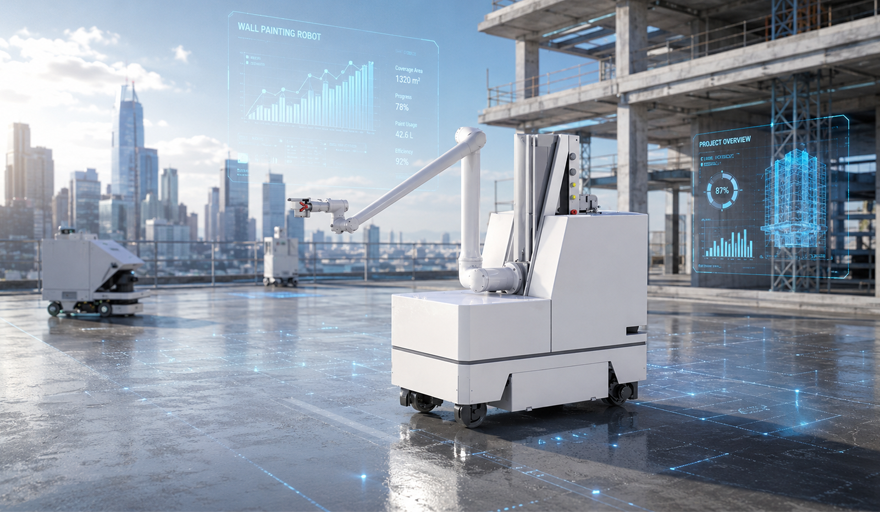
What Is a Building Painting Robot?
A building painting robot is a specialized construction robot developed to automate wall painting operations in residential, commercial, and renovation projects.
Unlike traditional manual painting methods, which depend heavily on worker experience and physical effort, robotic systems use automated movement and spraying control to achieve more standardized results.
A typical building painting robot integrates:
Intelligent movement systems
Automated spraying equipment
Positioning and control technology
Construction-oriented design
Safety monitoring functions
These capabilities allow contractors to improve painting efficiency while reducing repetitive manual operations on construction sites.
How Does a Building Painting Robot Work?
A robotic painting workflow usually includes surface positioning, movement planning, and automated spraying.
Intelligent Positioning and Movement
Construction environments can vary significantly in terms of wall structure, layout, and working conditions. A building painting robot uses intelligent control technology to maintain stable movement and accurately cover designated areas.
This helps reduce problems caused by inconsistent manual operation, such as uneven spraying distance or irregular coating thickness.
Automated Spraying Technology
The spraying system controls key parameters such as paint flow, spray distance, and movement speed. This enables more consistent coating quality compared with traditional manual processes.
For projects requiring higher automation levels, an automatic wall painting robot can help contractors improve workflow efficiency and achieve more reliable finishing results.
Why Are Construction Companies Using Building Painting Robots?
Improve Painting Efficiency
Large construction projects often require extensive wall finishing work. Manual painting can become time-consuming, especially when contractors need to complete multiple buildings within strict deadlines.
By automating repetitive painting tasks, robotic solutions help companies optimize construction schedules and improve overall productivity.
Maintain Consistent Coating Quality
Painting quality can vary depending on worker experience, working conditions, and fatigue levels.
A building painting robot follows predefined operating procedures to maintain more stable spraying performance. This helps contractors achieve consistent finishing quality across large wall areas.
The construction industry continues to face challenges related to skilled labor availability. Automation allows workers to focus on supervision, project management, and other higher-value activities while robots handle repetitive painting operations.
Painting tasks may involve long working hours, repetitive movements, or difficult working environments. Robotic solutions can reduce worker exposure to physically demanding operations and create a safer construction process.
What Are the Applications of Building Painting Robots?
Building painting robots are suitable for various construction scenarios where efficiency and finishing quality are important.
Large residential developments often require repeated interior painting operations across many units. Robotic painting solutions can help contractors improve efficiency and maintain consistent results throughout the project.
Commercial projects usually have strict completion schedules and quality requirements. Automated painting systems provide a reliable way to support large-area finishing tasks.
Renovation projects often require efficient solutions due to limited construction time and complex site conditions. Robotic painting technology can help improve productivity while reducing manual workload.
How Does a Building Painting Robot Compare with Traditional Painting Methods?
Factor | Traditional Painting | Building Painting Robot |
Labor requirement | Requires experienced workers | Reduces repetitive manual operations |
Quality consistency | Depends on operator skills | Provides standardized spraying processes |
Efficiency | Limited by workforce availability | Supports continuous operation |
Safety | Workers handle physically demanding tasks | Reduces exposure to challenging environments |
Scalability | Difficult for large projects | Suitable for repeated construction applications |
Compared with traditional methods, robotic painting solutions provide construction companies with better control over productivity, quality, and project execution.
How to Choose the Right Building Painting Robot?
Before investing in robotic painting equipment, contractors should evaluate several factors:
Project Requirements
Companies should consider:
Different projects may require different levels of automation and spraying capability.
Automation Capability
A suitable solution should provide reliable movement control, stable spraying performance, and easy operation.
Supplier Experience and Support
Technical support, training, maintenance, and customization capability are important when selecting a long-term robotic solution provider.
Beyond painting applications, construction companies can also explore other automation solutions such as a floor grinding robot to improve efficiency in different construction stages.
Frequently Asked Questions
What is a building painting robot used for?
A building painting robot is used to automate wall painting processes in construction and renovation projects. It helps improve efficiency, coating consistency, and workforce productivity.
Can a building painting robot replace manual painting?
Robotic painting systems are designed to assist construction teams rather than completely replace workers. They handle repetitive spraying tasks while operators manage supervision and quality control.
What are the benefits of using a painting robot in construction?
The main benefits include improved efficiency, consistent coating quality, reduced labor pressure, and enhanced workplace safety.
Are building painting robots suitable for large construction projects?
Yes. They are particularly suitable for projects requiring repeated painting operations, such as residential developments, commercial buildings, and large renovation projects.
How do companies choose the right painting robot?
Companies should evaluate project requirements, spraying performance, automation capabilities, supplier support, and long-term operational value.
Conclusion
Building painting robots provide construction companies with a practical solution for improving wall finishing efficiency and maintaining consistent coating quality. By combining automation technology with construction-specific applications, these systems help contractors reduce repetitive labor, improve productivity, and achieve more reliable project outcomes.
As construction continues moving toward automation and digital transformation, robotic painting solutions will become increasingly valuable for companies seeking smarter and more efficient construction workflows.