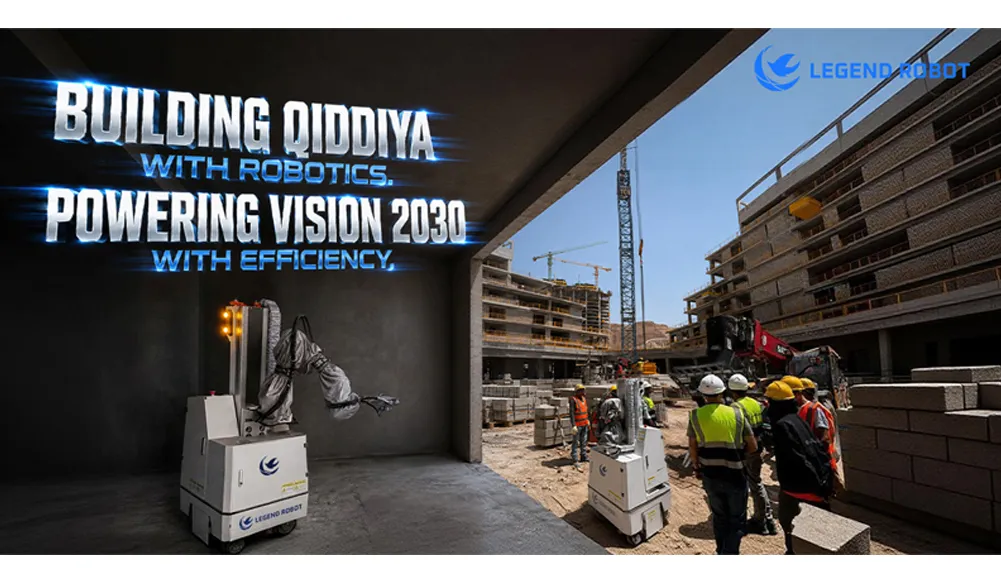
Painting robots are most effective when a project treats them as part of a production system rather than as a stand-alone machine. For large apartment, hotel, office and mixed-use interiors, the key planning questions are not only how fast the robot can spray, but also how much wall area is ready each day, how often the robot must move between rooms, how paint is supplied, and how many operators are needed to keep work continuous. A practical deployment plan converts these site variables into daily output, crew requirements and a room-by-room work sequence before equipment arrives.
Why Painting-Robot Productivity Depends on Workflow, Not Only Spray Speed
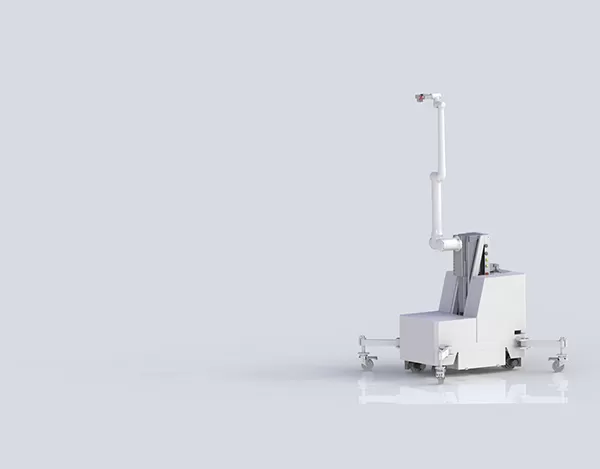
A modern latex paint spraying robot can automate large portions of interior wall and ceiling coating, but the rated spraying speed is only one part of actual project productivity. Legend Robot's 3.3m model is designed for residential buildings, apartments, hotels and office projects, with 95% coverage and a published latex-paint spraying efficiency of 230 m²/h. On site, however, productive spraying time is interrupted by room handovers, masking, paint refilling, quality checks, obstacle clearance and robot relocation.
This is why contractors should separate two numbers during planning: rated spraying capacity and effective daily output. Rated capacity describes what the machine can achieve under defined working conditions. Effective daily output is what the project actually receives after accounting for the percentage of the shift in which the robot is actively spraying.
A useful planning equation is: effective daily output = rated spraying output x active spraying time. Instead of assuming an arbitrary utilization factor, project teams should measure active spraying time during a mock-up floor or pilot zone. The result becomes a project-specific baseline for later floors.
How Much Wall Area Must Be Ready Before a Painting Robot Starts?
Robotic painting performs best when a sufficient workface is released in sequence. A robot can lose much of its productivity advantage if it repeatedly waits for preceding trades, masking work, wall repairs or access clearance. Before deployment, the site team should map the daily release area by room, floor and zone.
· Measure sprayable area, not gross floor area. Exclude openings, surfaces that remain unfinished, and zones blocked by other trades.
· Group similar rooms. Repeated apartment layouts or hotel rooms simplify route planning, paint supply and quality inspection.
· Define handover criteria. Walls should be accepted for dryness, surface condition and readiness before the robot enters the zone.
· Plan relocation paths. Door widths, thresholds, temporary storage and elevator access can determine how much time is lost between work areas.
In residential developments, the smallest planning unit is often the apartment or room cluster. In hotels and offices, it may be a corridor plus adjacent rooms. The goal is to create a repeatable flow in which one completed zone is followed by another ready zone without long gaps.
How Many Operators and Robots Should a Project Plan?
For standard-height interiors, Legend Robot states that one operator can supervise up to three units of its 3.3m painting robot configuration, with workers mainly handling paint refill and relocation. This changes labor planning from one painter per active spray position to one operator supervising multiple automated workstations.
Fleet sizing should begin with the project schedule. The basic calculation is: required robot count = total spray area / (effective daily output per robot x available spraying days). Because effective output should come from the project's mock-up rather than a brochure maximum, this approach produces a more realistic capacity plan.
The crew should also include the work that remains outside the robot's scope. Depending on the project, this may include protection and masking, paint preparation, manual touch-up, corner inspection, material movement and final acceptance. The best labor model is therefore not 'robot versus workers' but a redesigned crew in which the robot handles repetitive spraying and people manage preparation, exceptions and quality control.
Room-to-Room Deployment: A Practical Sequence
A mature deployment sequence reduces idle time and prevents different crews from competing for the same space. One practical sequence is to release a group of rooms, complete protection and surface checks, assign the robot route, spray the zone, perform inspection, and then move the robot while the completed area enters drying or follow-on work.
Projects that include both surface preparation and coating may also evaluate a putty spraying robot so that wall preparation and latex-paint application are planned as linked production stages rather than isolated activities. This is particularly useful in repetitive residential fit-out where the same sequence is repeated across many units.
For buildings with higher walls, atriums or public-space interiors, working height becomes another routing variable. Standard rooms and high-wall areas may need to be split into different work packages rather than forcing one robot configuration across the entire project.
When Should a 3.3m or 6.2m Painting Robot Be Used?
Planning Factor | 3.3m Latex Paint Robot | 6.2m Latex Paint Robot | Typical Project Fit |
Published coverage | 95% | 95%+ | Large-area interior painting |
Published daily output | 1,200-1,500 m²/day | 2,400-3,000 m²/day | Use as a capacity reference; validate on site |
Operator model | 1 operator for up to 3 robots | 1 operator for up to 3 robots | Multi-robot supervision |
Typical fit | Apartments, hotels, offices | High-rise residential and commercial interiors | Match robot reach to actual wall height |
The selection should be driven by actual wall height, room geometry and project segmentation. A taller robot is not automatically better for standard rooms if it increases movement complexity, while a lower-reach robot may create gaps in high-wall public areas.
Where higher interior walls dominate the work package, the 6.2m latex paint spraying robot is designed for high-rise residential and commercial buildings and provides a higher daily output range for large-area work.
FAQ: Planning Painting Robots on Construction Sites
Q1: How many painting robots does a large project need?
A1: Calculate the total sprayable wall area, divide it by the effective daily output measured during a pilot, and then divide by the number of available spraying days. Add schedule contingency if room release is uncertain.
Q2: Can painting robots work in occupied or partially completed buildings?
A2: Deployment should be planned around controlled work zones, ventilation, access management and coating safety requirements. OSHA notes that spray operations can present physical and health hazards and are subject to ventilation and other controls, so project-specific safety procedures remain necessary.
Q3: Do painting robots eliminate manual finishing?
A3:No. Robots are most valuable for repetitive large-area spraying. Human teams remain important for protection, material handling, edge cases, inspection, touch-up and coordination with other trades.
Conclusion
The strongest painting-robot business case comes from production planning, not from spray speed alone. Contractors should measure the ready workface, validate effective output in a mock-up, size the robot fleet against the schedule, and redesign the crew around preparation, supervision and quality control. When rooms are released in a predictable sequence and the robot configuration matches wall height and site logistics, automated painting can become a repeatable construction process rather than a one-off technology demonstration.