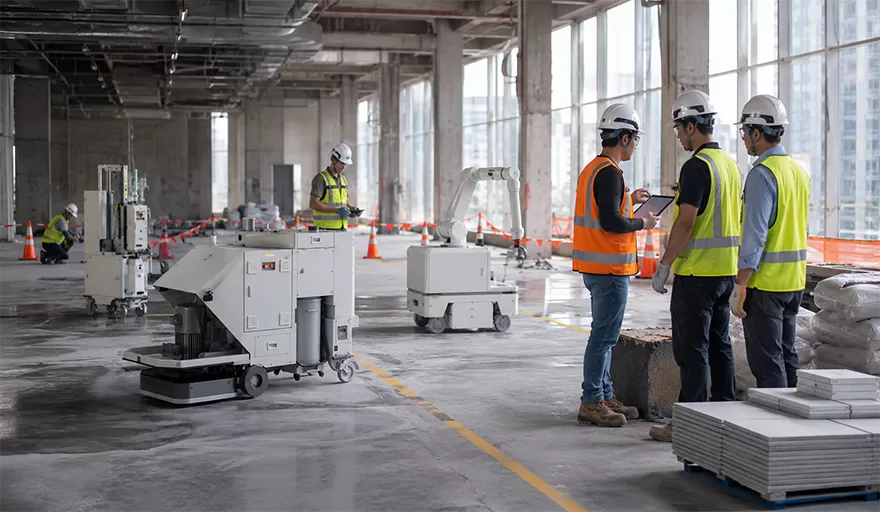
Receiving CITF approval is an important milestone, but it is not the end of a construction robot adoption project. For Hong Kong contractors, the real value begins after approval—when the robot is delivered, operators are trained, site conditions are prepared, workflows are adjusted, and project teams start using robotic equipment in daily construction activities.
Construction robots can support productivity, quality consistency, safety, and labour transformation. However, these benefits depend on proper deployment. A robot that is not matched with the site workflow, operator capability, safety arrangement, or documentation process may not deliver its full value.
This guide explains how contractors can deploy construction robots on site after CITF approval. It covers approval review, procurement, delivery, site preparation, operator training, safety planning, trial runs, workflow integration, documentation, reimbursement records, and long-term scaling.
Quick Answer: What Should Contractors Do After CITF Approval?
After CITF approval, contractors should not immediately treat the project as a simple equipment purchase. They should first review the approval conditions, confirm procurement requirements, arrange delivery and training, prepare the site, plan the robot workflow, collect usage records, and manage reimbursement documentation.
A practical deployment workflow includes:
1. Review the CITF approval letter and funding conditions.
2. Confirm the approved product, model, quotation, and procurement arrangement.
3. Place orders or arrange rental according to approved requirements.
4. Prepare the construction site before delivery.
5. Assign operators and arrange training.
6. Conduct delivery, inspection, installation, and commissioning.
7. Run a small-area pilot test before full deployment.
8. Integrate the robot into daily construction workflow.
9. Collect photos, videos, training records, payment proof, and usage evidence.
10. Submit reimbursement or follow-up documents according to CITF requirements.
11. Review performance and scale robot adoption to more projects.
The main principle is simple: approval first, controlled deployment second, documentation throughout the whole process.
Step 1: Review the CITF Approval Conditions Carefully
Once CITF approval is received, the first step is to review the approval details carefully. Contractors should confirm what has been approved, which product or technology is covered, what funding cap applies, and what supporting documents may be required later.
Key items to check include:
· Approved technology or robot name
· Approved product model
· Approved funding category
· Approved product price or eligible cost, where applicable
· Approved funding amount or matching ratio
· Procurement or rental conditions
· Required project usage
· Validity period
· Payment and reimbursement conditions
· Documentation and reporting requirements
· Any special conditions stated by CITF
This step is important because the contractor’s later procurement and deployment should match the approved scope. If the approved item is a specific robot model, the applicant should avoid switching products or changing the procurement arrangement without confirming whether this is allowed.
For example, if a contractor applied for a Latex Paint Spraying Robot (3.3m) for standard indoor residential painting, the later deployment should stay aligned with that planned use case. If the site requirement changes to high-wall public construction, the contractor may need to review whether a Latex Paint Spraying Robot (6.2m) would be more suitable and whether this change affects the funding arrangement.
Step 2: Confirm Procurement or Rental Before Moving Forward
After approval conditions are confirmed, contractors can move forward with procurement or rental according to the approved arrangement.
If the robot is purchased, the contractor should ensure the purchase order, invoice, payment proof, delivery document, and product model are consistent with the approved application. If the robot is rented, the rental agreement should clearly state the rental period, robot model, monthly cost, included services, delivery terms, and support arrangement.
For construction robot adoption, commercial documents should be clear and traceable. This is important not only for internal company records, but also for CITF reimbursement or verification.
A complete procurement or rental record may include:
· Purchase order or rental agreement
· Official quotation
· Invoice
· Receipt
· Payment proof
· Delivery note
· Product serial number or equipment identification
· Warranty or service terms
· Training arrangement
· Installation or commissioning record
· Contact information for technical support
Contractors should avoid informal arrangements that make later verification difficult. Clear documentation reduces administrative risk and helps the applicant complete the funding process more smoothly.
Step 3: Prepare the Site Before Robot Delivery
Construction robot deployment works best when the site is ready before the robot arrives. Poor site preparation can delay commissioning, reduce productivity, and create safety or coordination problems.
Site preparation should be based on the robot type and construction workflow.
For spraying robots such as the Latex Paint Spraying Robot (3.3m), Putty & Latex Paint Spraying Robot (3.3m), Latex Paint Spraying Robot (6.2m), and Putty & Latex Paint Spraying Robot (6.2m), contractors should check:
· Wall and ceiling accessibility
· Working height
· Room or zone size
· Power supply
· Material supply
· Ventilation
· Masking and protection work
· Movement path
· Surface readiness
· Coordination with other trades
· Safety zoning
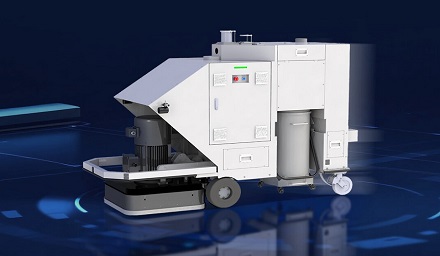
For the Floor Grinding Robot, contractors should check:
· Floor area and work zones
· Floor surface condition
· Obstacle removal
· Access route
· Power supply
· Dust control
· Waste handling
· Safety barriers
· Coordination with other trades
· Working schedule
For the Tile-Laying Robot, contractors should check:
· Floor base readiness
· Tile layout plan
· Tile supply arrangement
· Clear working area
· Access path
· Edge and corner treatment plan
· Manual support team arrangement
· Quality inspection process
· Post-installation protection
A robot should not be deployed into an unprepared site and expected to solve all workflow problems by itself. Contractors should create the conditions that allow the robot to operate efficiently and safely.
Step 4: Assign Operators and Define Team Roles
A successful construction robot deployment requires a clear team structure. Even when robots automate part of the construction process, people remain essential for planning, supervision, operation, safety management, and quality control.
Before deployment, contractors should assign roles such as:
· Robot operator
· Site supervisor
· Safety officer or safety coordinator
· Quality inspector
· Material preparation worker
· Manual support worker
· Maintenance or technical contact
· Documentation coordinator
For spraying robots, the operator may handle route planning, material preparation coordination, spraying parameter checking, and basic operation monitoring. Manual workers may still be needed for masking, edge areas, surface preparation, touch-up, and cleaning.
For floor grinding robots, the operator may manage work zones, robot movement, grinding workflow, dust control coordination, and inspection. Manual workers may still handle corners, obstacles, preparation, and post-grinding cleanup.
For tile-laying robots, the operator may coordinate tile supply, layout planning, robot operation, and installation progress. Manual workers may still be needed for special areas, edge tiles, and finishing details.
The goal is not to remove workers from the workflow. The goal is to shift workers from repetitive manual execution toward robot operation, workflow coordination, and quality control.
Step 5: Arrange Operator Training Before Full Deployment
Training is one of the most important parts of robot adoption. Contractors should not wait until the project is under schedule pressure before training operators. Training should be arranged before full-scale deployment.
A practical training program should include:
· Robot structure and main components
· Basic operation process
· Startup and shutdown procedure
· Safety precautions
· Emergency stop operation
· Parameter setting
· Material handling
· Work zone planning
· Daily inspection
· Basic troubleshooting
· Cleaning and maintenance
· Common site problems
· Documentation requirements
Training should combine classroom explanation, hands-on operation, and site-specific practice. Operators should understand not only how to operate the robot, but also when not to operate it.
For example, a spraying robot should not be used when the surface is not ready, masking is incomplete, material supply is unstable, or ventilation and safety arrangements are inadequate. A floor grinding robot should not be used when obstacles remain in the work area or dust control is not arranged. A tile-laying robot should not be used when the floor base is not ready or the layout plan is unclear.
Good training helps reduce downtime, prevent misuse, and build confidence among workers.
Step 6: Conduct Delivery, Inspection, and Commissioning
When the robot arrives on site, contractors should perform a formal delivery and inspection process.
The team should check:
· Robot model
· Serial number or identification
· Accessories
· Control system
· Power components
· Safety devices
· Operation manual
· Training materials
· Spare parts, if included
· Delivery condition
· Any visible damage
· Software or system version, if applicable
After inspection, commissioning should be carried out in a controlled environment. The purpose is to confirm that the robot can operate properly before entering full work production.
Commissioning may include:
· Power-on check
· Movement check
· Control system check
· Safety function check
· Trial operation
· Parameter adjustment
· Material flow test
· Route or area setup
· Communication check
· Operator confirmation
For CITF-related projects, contractors should consider keeping photo and video records during delivery, inspection, and commissioning. These records may help support project documentation and internal reporting.
Step 7: Start with a Small Pilot Area
Before using the robot across the full project, contractors should begin with a small pilot area. This is especially important for teams using construction robots for the first time.
The pilot area should be representative but manageable. It should allow the team to test robot movement, operation speed, material preparation, worker coordination, safety arrangement, and quality output.
For spraying robots, the pilot area may be one room, one corridor section, or one wall zone. For the Floor Grinding Robot, the pilot area may be a defined floor section. For the Tile-Laying Robot, the pilot area may be a small floor zone with a clear layout.
During the pilot, contractors should observe:
· How long setup takes
· Whether the site layout is suitable
· Whether workers understand their roles
· Whether the robot can move smoothly
· Whether material supply is stable
· Whether output quality meets expectations
· Whether any safety risks appear
· Whether workflow adjustments are needed
A small pilot helps the contractor identify problems early before large-scale deployment.
Step 8: Integrate Robots into the Construction Workflow
After the pilot run, the robot should be integrated into the project workflow. This requires coordination with other trades and site management teams.
Robot deployment should be planned as part of the construction schedule, not treated as a separate demonstration. The contractor should define:
· Which zones will be completed by the robot
· When the robot will enter each zone
· What preparation must be completed before robot work
· What manual support is required
· What quality inspection happens after robot work
· How rework or touch-up will be handled
· How the robot will move between zones
· Where the robot will be stored
· Who is responsible for maintenance
· Who records usage evidence
For wall finishing, the robot workflow may follow this order:
1. Surface inspection
2. Masking and protection
3. Material preparation
4. Robot setup
5. Trial spray
6. Robotic spraying
7. Manual edge work or touch-up
8. Quality inspection
9. Cleaning and record keeping
For floor grinding, the workflow may follow this order:
1. Floor inspection
2. Obstacle removal
3. Dust control setup
4. Robot setup
5. Grinding operation
6. Edge or corner manual treatment
7. Surface inspection
8. Cleaning
9. Record keeping
For tile laying, the workflow may follow this order:
1. Floor base inspection
2. Tile layout confirmation
3. Material preparation
4. Robot setup
5. Robotic tile laying
6. Manual support for edges and special areas
7. Alignment inspection
8. Protection after installation
9. Record keeping
This workflow planning is essential because robots create value when they are integrated into the full construction process.
Step 9: Manage Safety During Robot Operation
Safety planning should be active throughout deployment. Construction robots can reduce some manual risks, but they also introduce new operational requirements that must be managed properly.
Contractors should prepare safety arrangements such as:
· Defined robot work zones
· Clear access control
· Warning signs
· Emergency stop procedures
· Operator authorization
· Daily safety checks
· Safe material handling
· Electrical safety
· Ventilation for spraying work
· Dust control for grinding work
· Manual-worker coordination
· Incident reporting process
For spraying robots, safety planning should include material handling, ventilation, overspray control, masking, and worker exposure management.
For floor grinding robots, safety planning should include dust control, floor obstacles, cable management, noise, and movement control.
For tile-laying robots, safety planning should include tile handling, robot movement, manual coordination, and protection of newly installed areas.
A simple rule is: robot work zones should be treated as controlled work zones. Workers should know where the robot is operating, who is in charge, and what to do if something unexpected happens.
Step 10: Keep Records for CITF Follow-up and Reimbursement
After CITF approval, documentation remains important. Contractors should keep records throughout procurement, delivery, training, deployment, and usage.
Possible records include:
· Approval letter
· Purchase order or rental agreement
· Invoice
· Receipt
· Payment proof
· Delivery note
· Product serial number
· Installation photos
· Commissioning records
· Operator training attendance
· Training photos
· Site usage photos
· Site usage videos
· Work zone records
· Maintenance records
· Safety records
· Productivity or usage summary
· Reimbursement submission documents
Good documentation helps support reimbursement, internal audit, management review, and future applications. It also helps the contractor build a stronger case if the company wants to adopt more robots later.
For example, a contractor using the Putty & Latex Paint Spraying Robot (6.2m) in a public building can keep photos showing high-wall preparation, robot positioning, spraying operation, operator training, and completed surface areas.
A contractor using the Floor Grinding Robot can keep records of floor zones, grinding progress, operator training, equipment identification, and before-and-after surface conditions.
Step 11: Evaluate Performance After Deployment
After the robot has been used on site, contractors should evaluate performance. This helps the company decide whether to continue using the robot, expand to more sites, or adjust the deployment method.
Useful evaluation indicators include:
· Area completed
· Work hours used
· Number of operators required
· Manual labour reduced
· Setup time
· Downtime
· Rework or touch-up needs
· Quality inspection results
· Safety observations
· Worker feedback
· Supervisor feedback
· Maintenance issues
· Training effectiveness
· Suitability for future projects
The first deployment may not be perfect. Contractors should use the first project to learn how to improve site preparation, team coordination, training, and workflow design.
This is where construction robot adoption becomes a long-term capability rather than a one-time equipment purchase.
Step 12: Scale Robot Adoption Across More Projects
Once the first deployment is successful, contractors can consider scaling construction robot adoption.
A painting contractor may begin with the Latex Paint Spraying Robot (3.3m) in residential units, then later add the Latex Paint Spraying Robot (6.2m) for public or commercial projects.
A finishing contractor may start with the Putty & Latex Paint Spraying Robot (3.3m) and later use the Putty & Latex Paint Spraying Robot (6.2m) for high-wall applications.
A flooring contractor may start with the Floor Grinding Robot for large-area concrete floor preparation, then consider the Tile-Laying Robot for floor finishing.
A main contractor may build a multi-robot workflow by matching different robot types with different construction stages: floor grinding, putty spraying, latex paint spraying, and tile laying.
Scaling should be based on real project experience, not only funding availability. The best expansion strategy is to select robots according to repeated workflows where benefits are easiest to measure.
Common Mistakes After CITF Approval
The first mistake is assuming that approval alone guarantees successful deployment. Funding approval is only the beginning. Contractors still need proper site planning, training, workflow design, and documentation.
The second mistake is deploying the robot without a pilot area. A small trial helps identify site issues before full-scale use.
The third mistake is assigning operators too late. Workers should be trained before the robot is required for production work.
The fourth mistake is ignoring other trades. Robot operation needs coordination with site cleaning, material supply, access control, safety teams, and finishing workers.
The fifth mistake is failing to keep evidence. For CITF-related projects, missing invoices, photos, training records, payment proof, or usage evidence may create reimbursement or follow-up difficulties.
The sixth mistake is expecting robots to replace all manual work. Manual workers remain important for preparation, edge work, inspection, touch-up, troubleshooting, and coordination.
The seventh mistake is not reviewing performance. Without measuring the first deployment, contractors may miss the opportunity to improve future robot use.
Practical Deployment Checklist
Before full robot deployment, contractors can use this checklist.
Approval and Procurement
· Approval conditions reviewed
· Product model confirmed
· Purchase or rental arrangement aligned with approval
· Quotation, invoice, and payment documents prepared
· Delivery schedule confirmed
Site Readiness
· Work zone cleared
· Power supply confirmed
· Access route checked
· Safety zone arranged
· Materials prepared
· Other trades coordinated
· Protection work completed
Training and Team
· Operators assigned
· Training completed
· Supervisor appointed
· Safety responsibilities confirmed
· Manual support workers arranged
· Technical support contact available
Commissioning and Pilot
· Robot inspected after delivery
· Serial number recorded
· Trial operation completed
· Pilot area selected
· Pilot results reviewed
· Workflow adjusted
Documentation
· Photos and videos collected
· Training records kept
· Usage records prepared
· Payment proof stored
· Delivery and installation records filed
· Maintenance records retained
· Reimbursement documents organized
This checklist can help contractors move from approval to real project value more smoothly.
How Legend Robot Supports On-site Deployment
Construction robot adoption requires more than equipment supply. Contractors need model selection guidance, operator training, deployment support, troubleshooting, and after-sales service.
Legend Robot provides a complete value chain covering R&D, manufacturing, training, and after-sales service. Its product lineup supports both residential and public construction scenarios, including the Latex Paint Spraying Robot (3.3m), Putty & Latex Paint Spraying Robot (3.3m), Tile-Laying Robot, Latex Paint Spraying Robot (6.2m), Putty & Latex Paint Spraying Robot (6.2m), and Floor Grinding Robot.
Legend Robot’s intelligent system is built around four core modules: Perception, Decision, Execution, and Cloud Connectivity. These modules help robots understand their working environment, plan tasks with AI support, execute operations precisely, and coordinate management through a cloud platform.
For contractors, this means robot deployment can be supported as a complete process—from product selection and technical information to training, site operation, and after-sales response.
Conclusion: CITF Approval Is the Start of Real Robot Adoption
CITF approval can reduce the financial pressure of adopting construction robots, but successful deployment depends on what happens afterward.
Contractors should review approval conditions, complete procurement or rental properly, prepare the site, train operators, conduct a pilot run, integrate robots into the construction workflow, manage safety, and keep complete records for reimbursement and future evaluation.
Construction robots create the most value when they are not treated as isolated equipment. They should be integrated into real construction workflows such as painting, putty spraying, floor grinding, and tile laying.
Founded in 2021, Legend Robot Technology specializes in the R&D and manufacturing of construction robots. Through intelligent equipment, AI-driven systems, standardized manufacturing, operator training, and after-sales service, Legend Robot helps Hong Kong contractors deploy construction robots more smoothly after CITF approval and build long-term smart construction capability.
FAQ
Q: What should contractors do immediately after CITF approval?
A: They should review the approval conditions, confirm the approved product and model, check procurement or rental requirements, and plan documentation before deployment.
Q: Can contractors change the robot model after approval?
A: Contractors should avoid changing the approved model or procurement arrangement unless the change is confirmed as acceptable under the relevant approval conditions.
Q: Why should contractors start with a small pilot area?
A: A pilot area allows the team to test robot movement, operation speed, safety zoning, material supply, quality output, and worker coordination before full deployment.
Q: What records are important after deployment?
A: Important records include delivery notes, serial numbers, installation photos, training records, usage photos or videos, payment proof, maintenance records, and reimbursement documents.
Q: Does construction robot deployment eliminate manual workers?
A: No. Workers are still needed for preparation, supervision, edge work, inspection, maintenance, troubleshooting, and coordination with other trades.
References
1. Construction Innovation and Technology Fund (CITF) — General Application
https://www.citf.cic.hk/?route=funding&funding=2&lang=3
2. Construction Innovation and Technology Fund (CITF) — Pre-approved Technologies List / Technology Search
https://citf.cic.hk/?route=search-key&lang=1
3. Construction Innovation and Technology Fund (CITF) — Application Procedures
https://www.citf.cic.hk/?lang=1&route=procedure
4. Construction Innovation and Technology Fund (CITF) — FAQ
https://www.citf.cic.hk/?route=faq